Engagement hits an all time low!
Last month, I received an “as-it-happens” Google Alert to an article I wrote in 2014 for HRreview. Chuckling at the tardy alert, I opened it, curious for the reminder.
12 years ago, I wrote about candidate engagement:
Recruiting on LinkedIn should be easy. After all, it is the place where many people create online profiles to share their career history, skills and experience. So why are other users unresponsive? Why do your connection requests get ignored? Why is it proving more challenging than expected? I call it LinkedIn fatigue. LinkedIn is busy. People are busy. People are tired of receiving unexplained messages and cagey invites to connect. They want clarity, speed and manners.
12. Years. Ago.
Even in 2014, when LinkedIn only had 300 million users, I suggested recruiters contact prospects by email or the social channels they do hang out on.
But that never guaranteed a response.
Today, it’s even less likely.
Engagement vs noise: scammers are scamming
This week, two job seekers booked calls in my calendar to discuss the “email” I had sent them. As impressed as I was by the cheek to just book a call, I was upset to let them down. I also lost a lot of time, not only by messaging back and forth to explain the scam, but by adding warnings to my LinkedIn profile and website’s contact page.
I am far from the only person being impersonated and “sending” emails. The scammers use LLMs surprisingly well to create convincing emails, with profile photos, real websites, etc. They are nailing engagement in all the wrong ways!
Except for one obvious red flag: they all use a Gmail email address.
OMG, as I’m writing, I just received a text from “Royal Mail” about a “delivery” sent from sacharette@gmail.com! Yesterday, I received my second one from an “Editor” at a publishing house using editorliese.hachettelivre@gmail.com. 😩
Of course, I report the emails to Google, but does Google do anything about them?
I’ve never heard back, and Stacy Zapar reckons not. In fact, she is so frustrated by Google’s inaction that she created The Catfish List. A list of over 110 impersonated recruiters and 1200+ email addresses.
This article in the iPaper expands on the entire scam. Jobseekers take note!
None of this helps recruiter credibility or helps their candidate engagement! The second job seeker yesterday thought I was lying, and anyone who knows about my childhood knows how triggering that is! And I am not even trying to fill a role or have my message stand out in the sea of misinformation.
Engagement vs noise: spammers are spamming
Ever since LinkedIn introduced recruiter licenses, way back in the aughts, recruiters have been sending mass InMauls, as Steve Levy rightly calls them. Being able to run a quick search, use a templated message and click send, without checking fit, was never going to end well.
Then came the tools to automate invites and follow-up notes. Hey, I’ll confess, I’ve used them myself, but even the most personalised and relevant messages were rarely received well. And no matter how much LinkedIn tries to limit their use, the damage is done. People now expect their inbox to be full of junk, and have long switched off the email alerts.
Of course, the true sourcers amongst us were the ones to succeed. Using their innate curiosity to find people in unique places and engage them thoughtfully. No spamming; only quality outreach. But now AI has made finding people a breeze, even pulling in their email addresses in seconds. The spammers can spam faster.
And let’s not forget AI-written messages when they’re spewed forth with too little oversight. I don’t even need to explain how awful they are; you’ve received them, you know. They’re nearly as bad as those AI tools that write post comments and make people look s̶t̶u̶p̶i̶d̶ unprofessional.
Mass noise at scale. Noise you need to be heard through!
Clarity: Untrash engagement
In 2014, one of my suggestions was to fill out your LinkedIn profiles; there’s a whole chapter on that in The Robot-Proof Recruiter, too. Even the scammers know to create fake profiles, so maybe yours could do with a makeover.
People will check to see if you are real. Do you look worthy of someone’s time? Is your photo visible to everyone or just first-level connections? Does your profile include achievements and knowledge of the sector? Are your posts and comments adding value to the people you look to hire? Basically, if you send a message that gets attention, will your profile prompt the effort of replying?
What I didn’t say in 2014: conduct far better recruitment alignment meetings (intakes/job briefs) with your managers!
- Do not work on a role without a meeting (get your boss’s approval!)
- Do not work from a job description based on the person who left 😬
- Do not work from a job description they made on their LLM of choice 😱
- Do not work on a role if you don’t understand it by the end of the meeting
If you want to stand out in the noise, improve the beginning of the entire hiring process.
Guide your hiring manager to create a forward-looking job description that is clear to understand, enticing because you know what the person is coming in to do, and was developed with time and consideration.
You have one shot to get someone’s attention; get it with clarity.
🍀
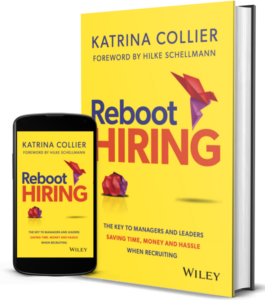
P.S. Thanks to the input of many successful recruiters, both Reboot Hiring and The Robot-Proof Recruiter can help you nail the intake!